* To be updated for Space Marines 10th edition codex*
Playing With Your New Army
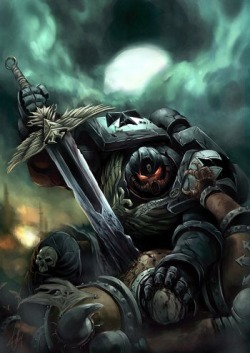
This page is designed to show new players the basic intricacies of the Black Templars turn and give them options on how to play them. This page is not intended to include every situation that comes up, nor do I want to do so. That is part of the fun of Warhammer 40k, being able to come up with a tactical response for whatever is happening in the game. What I do want to do, however, is give a basic formula of things you could do in those given situations. It is up to the player to decide what is the best course of action. Hopefully this page will allow a new player to see through the eyes of a competitive gamer and help them think from a different perspective, therefore bettering their chances to win their games with the Black Templar. They perhaps will learn something here that they didn't know, or hadn't thought of doing in a game. With that being said, I do not expect people to take everything written here as 'The Word'. Just know that everything here comes from the experience of playing hundreds of games in three different editions of Warhammer 40k (#3-5). This page is advice for you, the reader, but should not be considered a requirement of play. This page includes quite a bit of information, so it'll be a long read. Just don't say I didn't warn you. With that, enjoy reading everything here! :)
Deployment:
It is widely considered by competitive players that deployment is one of the most important parts of the battle. Of course, you have things such as list building that plays into a successful battle, but you can easily win or lose a game by how you deploy. The choices you make in this phase are so important. Unfortunately, it is very difficult to tell players how they need to deploy. There are innumerable factors that influence how you set up, if you do so at all. Experience is your best educator here but I can give you a pointers to get you started.
The most important factor to consider is what type of army you are running. Are you playing a gun-line army? Perhaps a drop pod army. Maybe its a heavy mech list. Each of these armies require different deployment philosophies that are also dependent on the Mission Deployment type you've got to work with. For example, an assault oriented army needs to get into combat as soon as possible. Generally speaking, you would try and deploy as close to your enemy as possible with clear lanes of advance. Adversely, if you were running the rare gun-line army, you need to be a good distance away and usually in heavy cover. Obviously, if you're using a drop pod army, you'll be starting in reserve and coming out of it with an eye on capturing objectives, dropping in your opponent's face, or castling up depending on the situation. Think about what type of army you are running, and how best to optimize its chances on the battlefield in deployment.
Second, you need to think about your opponent's army. This one is very important. Does your enemy have massive amounts of firepower (i.e. Alpha Strike) that will do massive damage to you if they get the first turn? While not exactly a competitive army, almost everyone knows of the "Leafblower" Astra Militarum army. If the opponent of the Leafblower deployed on the board and didn't have the first turn, the AM player would literally blast the other army off the table. So deploying in reserve if playing an objective game would definitely be a positive to minimize the damage on your forces right out of the gate. If you had first turn against a large Alpha Strike army, you might consider deploying very aggressively to minimize traveling time to your opponent's forces. If you can manage that, your opponent will glean much less firepower in your direction because you'll be in melta and CC range.
What are you going to do if facing a close combat army? Tyranids or Blood Angels come to mind here. Obviously, if you are also running a close combat army, you want to be as close to your enemy as possible. However, not all situations call for this approach. If you followed my steps to building a 8th Edition list, you'll have plenty of ways to get into transports. But if you didn't, you'll want to set up to give whatever transport popping abilities you have a clear lane to your enemy. Sometimes there are such nasty units bearing down on you, that you don't really want to toss important units at. This is where bubble wrap comes into play. Use them to screen and protect your vulnerable units.
The last really important thing to consider when making your deployment choices and that is your opponent's deployment. When forced to deploy second (or even alternating unit placement), it gives you an opportunity to take advantage of the way your enemy deployed their forces. Often this comes in the form of a "Refused Flank" deployment. Refused flank means that you deploy opposite of the where your opponent sets up their forces. This forces your opponent to spend much more time getting to you, while you can often use this to outmaneuver your enemy or prevent them from getting to your lines until late in the game. This is especially beneficial if running a gun-line army. If you alternated in deployment (not very common), you can refuse flank your enemy to hopefully isolate parts of their forces by themselves. This takes some subtle baiting. You can also implement refuse flank tactics from reserve by coming on the board opposite of your opponents forces after they have committed to fighting a smaller portion of your army.
There are also other important deployment strategies available that might be appropriate based on the archetype you are using. One such tactic is "Cornering". Because Kirby did an excellent job of explaining this, I would suggest taking a look at the Cornering Article on his blog. The article also briefly mentions another deployment strategy called "Hedging" or "Hedgehog" as Kirby puts it. This entails deploying in such a manner as to block the side armor of your vehicles (i.e. Predators) with another vehicle's front armor. Often, this occurs on one side of the board and closely resembles "Castling", though you can use this in a split force to protect your fragile flanks.
Castling is a common deployment strategy used to give you a highly defensible position by deploying your forces in close proximity of each other, often providing cover to everything in your army behind the first row. This is mostly used against Drop Pod armies, as you don't want your opponent to be able to drop into the midst of your forces. However, it is also used defensively to create a perimeter that is difficult to breach and is especially useful in objective games. This allows you to block your opponent's movement, while still being able to fire to near full efficiency.
Of course, there are a great many more deployment strategies available to players, but experience is always the best teacher for the more advanced ones. :)
Movement:
Movement is nearly as important to your army as deployment is. It decides the flow of the game for both you and your opponent. Growing threat bubbles, the opening of fire lanes, blocking line of sight, tank shocking, and late-game objective grabs are all part of this and are integral to your game play. A person who can take advantage of every tool in the shed will have a much better shot at winning the battle.
Starting off, you need to be acutely aware of how far each of your units can move in each turn. Learn to accurately see distances without having to measure, as it will help make your decisions much less risky. It will also provide you with information about your opponent's battle plans and how long it will take for them to get in range with weapons/assault. Knowing these things allows you to time to provide a response to the threat, or launch an attack of your own.
Essentially, this is your unit's threat bubble. Its movement, plus assault range will give you the bubble for an assault unit. Adversely, you'd add movement and weapon ranges together for a shooty unit. Its essential for a player to know the threat bubbles of every unit, as it will provide important targeting priorities (which we'll talk about later). In addition, you can shift the flow of the game by applying pressure to a part of your enemy's line, allowing you to hit a weakened flank when they commit a response to your threat.
A lot of the movement you will do in a Black Templars army is vehicle based. These vehicles move a maximum of 12", provided it isn't damaged. Its likely most of the movement will be done by Rhinos and the Land Raider Crusader so that you can bring their cargo (angry Marines) to their destinations. You have to be extremely careful in their movement so that you do not waste precious turns blocking any of your transports from making maximum movement, or blocking fire lanes to your opponent. The last is especially important, as every last shot is important.
Most of our lists will also contain something from the Fast Attack slot. These often have larger movement ranges and many can deep strike onto the board. This provides a layer of threat that usually cannot be fully accounted for by your opponent. These units provide you a couple of tactical options. First is to block enemy units advance. A well placed units will screen your more vulnerable units and force your opponent to go around your unit (you cannot move a unit within 1" of an enemy unit unless assaulting). And if they do assault you, the unit performed exactly as you wanted it to by providing a speed bump to your vulnerable units. If done properly, you can usually avoid losing your unit, but even if you do, their loss will not hurt your overall game.
Second, these units provide you with an option for late game objective contesting. I cannot count how many games I've been able to move flat out with my Land Speeders to objectives held by my opponent to deny them a score, allowing me to win. This is a vital part of their use in the list, so don't overlook it when the time comes.
As alluded to earlier, you can block your enemy's movement with your units. While Fast Attack units are excellent in this role, so are Rhinos (especially empty ones). Is your enemy advancing down a narrow corridor with numerous units? Park a Rhino there and watch them scramble to either kill the rhino, or go around. This is even more effective when blocking opponent's transports. Once this has been done, you might have effectively cut off your opponent's mobility, causing them to spend several turns moving around you. That means less turns firing at you and assaulting your forces. This blocking move is also ideal for late game objective denials, especially if the objective is on the board edge or pinned against a terrain piece not easily gotten to (i.e. a ruin wall). They will have to destroy the vehicle and get through any squad previously embarked to get access to the objective.
So knowing these things, when do you move? Obviously, if you're running an assault-oriented list, you want to always be moving to close the distance between you and your opponent. However, for some armies or units, sitting in one place is beneficial while they blast the enemy. In these situations, movement might only be advisable when there are no open fire lanes for that particular unit or it might be out of range. Or, you might need to pack up your troops and start moving towards an objective. Both present a valid reason for movement. Its up to you to decide the necessity of movement, and weigh in the possible consequences of such a move.
Deployment:
It is widely considered by competitive players that deployment is one of the most important parts of the battle. Of course, you have things such as list building that plays into a successful battle, but you can easily win or lose a game by how you deploy. The choices you make in this phase are so important. Unfortunately, it is very difficult to tell players how they need to deploy. There are innumerable factors that influence how you set up, if you do so at all. Experience is your best educator here but I can give you a pointers to get you started.
The most important factor to consider is what type of army you are running. Are you playing a gun-line army? Perhaps a drop pod army. Maybe its a heavy mech list. Each of these armies require different deployment philosophies that are also dependent on the Mission Deployment type you've got to work with. For example, an assault oriented army needs to get into combat as soon as possible. Generally speaking, you would try and deploy as close to your enemy as possible with clear lanes of advance. Adversely, if you were running the rare gun-line army, you need to be a good distance away and usually in heavy cover. Obviously, if you're using a drop pod army, you'll be starting in reserve and coming out of it with an eye on capturing objectives, dropping in your opponent's face, or castling up depending on the situation. Think about what type of army you are running, and how best to optimize its chances on the battlefield in deployment.
Second, you need to think about your opponent's army. This one is very important. Does your enemy have massive amounts of firepower (i.e. Alpha Strike) that will do massive damage to you if they get the first turn? While not exactly a competitive army, almost everyone knows of the "Leafblower" Astra Militarum army. If the opponent of the Leafblower deployed on the board and didn't have the first turn, the AM player would literally blast the other army off the table. So deploying in reserve if playing an objective game would definitely be a positive to minimize the damage on your forces right out of the gate. If you had first turn against a large Alpha Strike army, you might consider deploying very aggressively to minimize traveling time to your opponent's forces. If you can manage that, your opponent will glean much less firepower in your direction because you'll be in melta and CC range.
What are you going to do if facing a close combat army? Tyranids or Blood Angels come to mind here. Obviously, if you are also running a close combat army, you want to be as close to your enemy as possible. However, not all situations call for this approach. If you followed my steps to building a 8th Edition list, you'll have plenty of ways to get into transports. But if you didn't, you'll want to set up to give whatever transport popping abilities you have a clear lane to your enemy. Sometimes there are such nasty units bearing down on you, that you don't really want to toss important units at. This is where bubble wrap comes into play. Use them to screen and protect your vulnerable units.
The last really important thing to consider when making your deployment choices and that is your opponent's deployment. When forced to deploy second (or even alternating unit placement), it gives you an opportunity to take advantage of the way your enemy deployed their forces. Often this comes in the form of a "Refused Flank" deployment. Refused flank means that you deploy opposite of the where your opponent sets up their forces. This forces your opponent to spend much more time getting to you, while you can often use this to outmaneuver your enemy or prevent them from getting to your lines until late in the game. This is especially beneficial if running a gun-line army. If you alternated in deployment (not very common), you can refuse flank your enemy to hopefully isolate parts of their forces by themselves. This takes some subtle baiting. You can also implement refuse flank tactics from reserve by coming on the board opposite of your opponents forces after they have committed to fighting a smaller portion of your army.
There are also other important deployment strategies available that might be appropriate based on the archetype you are using. One such tactic is "Cornering". Because Kirby did an excellent job of explaining this, I would suggest taking a look at the Cornering Article on his blog. The article also briefly mentions another deployment strategy called "Hedging" or "Hedgehog" as Kirby puts it. This entails deploying in such a manner as to block the side armor of your vehicles (i.e. Predators) with another vehicle's front armor. Often, this occurs on one side of the board and closely resembles "Castling", though you can use this in a split force to protect your fragile flanks.
Castling is a common deployment strategy used to give you a highly defensible position by deploying your forces in close proximity of each other, often providing cover to everything in your army behind the first row. This is mostly used against Drop Pod armies, as you don't want your opponent to be able to drop into the midst of your forces. However, it is also used defensively to create a perimeter that is difficult to breach and is especially useful in objective games. This allows you to block your opponent's movement, while still being able to fire to near full efficiency.
Of course, there are a great many more deployment strategies available to players, but experience is always the best teacher for the more advanced ones. :)
Movement:
Movement is nearly as important to your army as deployment is. It decides the flow of the game for both you and your opponent. Growing threat bubbles, the opening of fire lanes, blocking line of sight, tank shocking, and late-game objective grabs are all part of this and are integral to your game play. A person who can take advantage of every tool in the shed will have a much better shot at winning the battle.
Starting off, you need to be acutely aware of how far each of your units can move in each turn. Learn to accurately see distances without having to measure, as it will help make your decisions much less risky. It will also provide you with information about your opponent's battle plans and how long it will take for them to get in range with weapons/assault. Knowing these things allows you to time to provide a response to the threat, or launch an attack of your own.
Essentially, this is your unit's threat bubble. Its movement, plus assault range will give you the bubble for an assault unit. Adversely, you'd add movement and weapon ranges together for a shooty unit. Its essential for a player to know the threat bubbles of every unit, as it will provide important targeting priorities (which we'll talk about later). In addition, you can shift the flow of the game by applying pressure to a part of your enemy's line, allowing you to hit a weakened flank when they commit a response to your threat.
A lot of the movement you will do in a Black Templars army is vehicle based. These vehicles move a maximum of 12", provided it isn't damaged. Its likely most of the movement will be done by Rhinos and the Land Raider Crusader so that you can bring their cargo (angry Marines) to their destinations. You have to be extremely careful in their movement so that you do not waste precious turns blocking any of your transports from making maximum movement, or blocking fire lanes to your opponent. The last is especially important, as every last shot is important.
Most of our lists will also contain something from the Fast Attack slot. These often have larger movement ranges and many can deep strike onto the board. This provides a layer of threat that usually cannot be fully accounted for by your opponent. These units provide you a couple of tactical options. First is to block enemy units advance. A well placed units will screen your more vulnerable units and force your opponent to go around your unit (you cannot move a unit within 1" of an enemy unit unless assaulting). And if they do assault you, the unit performed exactly as you wanted it to by providing a speed bump to your vulnerable units. If done properly, you can usually avoid losing your unit, but even if you do, their loss will not hurt your overall game.
Second, these units provide you with an option for late game objective contesting. I cannot count how many games I've been able to move flat out with my Land Speeders to objectives held by my opponent to deny them a score, allowing me to win. This is a vital part of their use in the list, so don't overlook it when the time comes.
As alluded to earlier, you can block your enemy's movement with your units. While Fast Attack units are excellent in this role, so are Rhinos (especially empty ones). Is your enemy advancing down a narrow corridor with numerous units? Park a Rhino there and watch them scramble to either kill the rhino, or go around. This is even more effective when blocking opponent's transports. Once this has been done, you might have effectively cut off your opponent's mobility, causing them to spend several turns moving around you. That means less turns firing at you and assaulting your forces. This blocking move is also ideal for late game objective denials, especially if the objective is on the board edge or pinned against a terrain piece not easily gotten to (i.e. a ruin wall). They will have to destroy the vehicle and get through any squad previously embarked to get access to the objective.
So knowing these things, when do you move? Obviously, if you're running an assault-oriented list, you want to always be moving to close the distance between you and your opponent. However, for some armies or units, sitting in one place is beneficial while they blast the enemy. In these situations, movement might only be advisable when there are no open fire lanes for that particular unit or it might be out of range. Or, you might need to pack up your troops and start moving towards an objective. Both present a valid reason for movement. Its up to you to decide the necessity of movement, and weigh in the possible consequences of such a move.
The Turn -- What's Important
Picking up where the previous section left off, we'll continue to examine the typical Black Templars turn and how to play it. Remember, this is an overview, not an all-encompassing document as I cannot possibly think of every conceivable situation that will come up. The goal is to guide you into becoming a better player, not "play" the game for you. So let us continue.
Target Priority (Shooting):
If you cannot properly use your fire support to maximum effect, you will lose. Right now, armies with excellent Alpha Strike capabilities are the ones who are doing the best in tournaments. That doesn't mean you cannot be successful if you don't have an Alpha Strike, but you need to know how to neutralize your opponent's firepower if you are going to survive long enough to fulfill your own battle plans.
In most Black Templar armies, long ranged fire support comes in short supply. Because of this, we need to maximize the use of our shots from the get-go. There are several things that are required of us in order to be successful in a game. First (but not necessarily most important), we need to open up any transports the opponent has so we can effectively shoot/assault the guys inside. This also limits their mobility. Second, we need to neutralize the opponent's firepower. Anything that hurts our transports or our fire support is bad. The quicker we can limit these threats, the better.
Depending on your weapon load out, a unit might have a range of targets available to them. You have to weight the overall picture with the immediate results. For example, you have a crusader squad armed with a meltagun and bolt pistols who are in charge range of an enemy unit. Also within range is a vehicle which has been shooting pretty effectively in the game. Which target do you choose? Do you shoot the squad and wittle them down before the charge, possibly not being able to charge the enemy unit? Or do you risk shooting the vehicle attempting to get a favorable damage result and therefore destroying it? Or do you split your shots? In this vague example, it would be a tough call without more information. Charging the enemy unit might provide it protection from shooting should the combat not get resolved and the enemy doesn't fall back. However, that vehicle might have destroyed numerous vehicles/squads during the game and its destruction would allow you to keep precious your remaining resources from one less threat. But if you fail to kill the vehicle, you will likely let your enemy get away or get charged by them. Likewise, if you choose to charge the enemy, the vehicle is allowed free reign to fire its weapons at your army. While I cannot give you a clear answer on which one is better, you get an idea about why target priority has such important consequences.
Because a lot of our competitive lists require us to be mechanized, that allows us to prioritize certain enemy units over others. Besides the key transport vs fire support decision, you might have to decide between destroying incoming close combat mobs/Monstrous creatures or their fire support. In these cases, the choices are a bit easier. Most infantry based units are unable to reliably destroy vehicles so you can usually just stay embarked without fear. In addition, if they do have a way to crack your transport, you can usually just move out of range by virtue of being able to move 12" to infantry's 4-6". There is also the choice between certain types of fire support: Anti-Tank or Anti-Infantry. In most cases, the clear target will be enemy AT. However, a particular vehicle might stand out during the course of a game that poses a certain amount of threat to your infantry on the ground. In these cases, perhaps these are the proper target choice.
While this does not hold 100% in every circumstance, but in general, the following target priority list should hold some sway. It isn't a strict guide, as certain situations cannot be decided by a simple list and you'll have to take advantage of the opportunities presented to you. Starting with the most important (the first two are inter-changeable depending on the type of list you're playing):
Close Combat:
It is considered by many in the competitive 40k community that fielding any army without some sort of a close combat presence is folly. The exception being gunline armies, but they fulfill a very specific niche by literally blasting you off the board before close combat becomes an issue. The Black Templars are not usually able to do this in the traditional sense. Everything you bring to the table should be in a support role, with some rare exceptions. There are some important things to discuss regarding assault that will help you properly use your resources in battle.
First thing, and probably the most important to note: Do not try to kill your opponent's uber close combat squads in close combat unless you can be absolutely sure you'll come out ahead. Our dedicated CC-units often are our Assault Terminators. But the normally fielded size of 5, isn't going to kill a 5-man TH/SS terminator squad. Our terminators cost us about 200 points a squad, minimum. Its just not worth the risk of losing the squad in the attempt. There are exceptions of course; like if you can easily shrug off everything else your opponent is throwing at you, except the enemy's uber unit. Then your best chance at stopping that unit (or at least seriously gimping it) is to charge it. But those situations will rarely happen. Likewise, you can also field TH/SS Terminator squads who do well destroying your opponent's dedicated-CC units.
Second, while the Black Templars have rules to facilitate close combat prowess, specifically with our Chapter Tactic, that does not mean we are a close combat army. Shooting is king in 8th Edition and this fact has not changed in 10 years. Our special characters and Crusader squads can be close combat oriented, but do not mistake them for extreme quality. One of the great strengths of the Black Templars is our adaptability. We need to use close combat as a supporting tool in our battle plans, but do not focus entirely upon it to win the game. Crusader squads simply do not do enough damage in close combat unless numbering over 10 marines and supported by HQs. Nor does the codex have cost effective units that can knock over any unit it wants. Those we do have are expensive and will see all of your opponent's guns pointed their direction. Be mindful of this during your games.
On occasion, you will have to use bubble wrap to protect objectives, your Heavy Support, or any other vulnerable unit in your army. Usually this will be against dedicated CC units and normally will just be a crusader squad on our side. If you see your opponent maneuvering to a position of power where it can launch a charge at your weak point, quickly decide if it is worth the loss of the crusader squad and then toss it in the way of that squad. Try to get the charge if you can, but most of the time you'll have to settle for screening your vulnerable units and forcing your opponent to charge through you. Obviously, if you use MSU, bubble-wrap units are easy to come by, so your decision should be very quick.
Lastly, be sure to prioritize your charges. This is not as critically important as shooting target priority is, but you will make or break the game with close combat as it does the most damage in the shortest amount of time. Get into combat as soon as possible, but don't charge your enemy's throwaway squads if you can help it. Fire support, average close combat units, or troops squads are preferable here.
Miscellaneous:
So far, I've basically talked about the different parts of the turn and how it relates to the Black Templars. This little bit is going to discuss the parts which you cannot directly control: the missions, as well as anything else I can think of along the way that doesn't fit in the previous categories.
I basically want to quickly make a mention here about playing the mission. Some of my opponents have lost close games because they lost sight of the mission goals. Do not be blinded by the "heat of battle". There are objectives to secure, kill points to gain, or some other equally important mission victory condition. The Black Templars cannot reliably table our opponents (tabling = destroying your opponent's entire army) unless they are playing terribly or have fielded equally terrible army lists against you. Both are incredibly rare, as even the worst list has decent enough durability against our killing power in 8th Edition. We win via finesse, balanced play and manipulating the flow of battle to earn more victory conditions than our opponent. Always read the missions very through before and during the game. Everything you do in the game should have the victory conditions of the mission in mind. If you don't, and are just mindlessly aiming to kill the opponent, you will likely lose. Just something to be mindful of. ;)
Continue the trek: BT 101: Tips For Beating Other Armies
Or finish it up: Part Five: The Conclusion
Target Priority (Shooting):
If you cannot properly use your fire support to maximum effect, you will lose. Right now, armies with excellent Alpha Strike capabilities are the ones who are doing the best in tournaments. That doesn't mean you cannot be successful if you don't have an Alpha Strike, but you need to know how to neutralize your opponent's firepower if you are going to survive long enough to fulfill your own battle plans.
In most Black Templar armies, long ranged fire support comes in short supply. Because of this, we need to maximize the use of our shots from the get-go. There are several things that are required of us in order to be successful in a game. First (but not necessarily most important), we need to open up any transports the opponent has so we can effectively shoot/assault the guys inside. This also limits their mobility. Second, we need to neutralize the opponent's firepower. Anything that hurts our transports or our fire support is bad. The quicker we can limit these threats, the better.
Depending on your weapon load out, a unit might have a range of targets available to them. You have to weight the overall picture with the immediate results. For example, you have a crusader squad armed with a meltagun and bolt pistols who are in charge range of an enemy unit. Also within range is a vehicle which has been shooting pretty effectively in the game. Which target do you choose? Do you shoot the squad and wittle them down before the charge, possibly not being able to charge the enemy unit? Or do you risk shooting the vehicle attempting to get a favorable damage result and therefore destroying it? Or do you split your shots? In this vague example, it would be a tough call without more information. Charging the enemy unit might provide it protection from shooting should the combat not get resolved and the enemy doesn't fall back. However, that vehicle might have destroyed numerous vehicles/squads during the game and its destruction would allow you to keep precious your remaining resources from one less threat. But if you fail to kill the vehicle, you will likely let your enemy get away or get charged by them. Likewise, if you choose to charge the enemy, the vehicle is allowed free reign to fire its weapons at your army. While I cannot give you a clear answer on which one is better, you get an idea about why target priority has such important consequences.
Because a lot of our competitive lists require us to be mechanized, that allows us to prioritize certain enemy units over others. Besides the key transport vs fire support decision, you might have to decide between destroying incoming close combat mobs/Monstrous creatures or their fire support. In these cases, the choices are a bit easier. Most infantry based units are unable to reliably destroy vehicles so you can usually just stay embarked without fear. In addition, if they do have a way to crack your transport, you can usually just move out of range by virtue of being able to move 12" to infantry's 4-6". There is also the choice between certain types of fire support: Anti-Tank or Anti-Infantry. In most cases, the clear target will be enemy AT. However, a particular vehicle might stand out during the course of a game that poses a certain amount of threat to your infantry on the ground. In these cases, perhaps these are the proper target choice.
While this does not hold 100% in every circumstance, but in general, the following target priority list should hold some sway. It isn't a strict guide, as certain situations cannot be decided by a simple list and you'll have to take advantage of the opportunities presented to you. Starting with the most important (the first two are inter-changeable depending on the type of list you're playing):
- Opponent's Anti-Tank Capabilities. Prioritization goes to units specifically devoted to popping transports, such as Hydras, Rifleman Dreadnoughts, or Missile Launcher squads, before those which are used against heavy armor (i.e. Lascannon teams).
- Opponent's Transports. You cannot do damage to the squads inside until you have gotten them out of their transport, so it is very high on the priority list.
- Opponent's Anti-Infantry Capabilities. Once you've popped enemy transports, you'll likely be charging the squads previously inside. However, once the combat is over, you are vulnerable to your opponent's AI fire support. To minimize this risk, they should be neutralized if #1-2 are sufficiently taken care of.
- Opponent's Troops and/or Units Occupying Objective. This is self explanatory, especially in objective games. This also includes vehicles such as Land Speeders or Piranhas.
- Opponent's Rock Units. If you cannot maneuver out of the way of a nasty unit, generally close combat oriented, then you will be forced to destroy them. Likely examples are Assault Terminator squads or Blood Angels Death Companies.
- Everything Else. If there is something not listed above, it falls under this category and is of minimal target priority.
Close Combat:
It is considered by many in the competitive 40k community that fielding any army without some sort of a close combat presence is folly. The exception being gunline armies, but they fulfill a very specific niche by literally blasting you off the board before close combat becomes an issue. The Black Templars are not usually able to do this in the traditional sense. Everything you bring to the table should be in a support role, with some rare exceptions. There are some important things to discuss regarding assault that will help you properly use your resources in battle.
First thing, and probably the most important to note: Do not try to kill your opponent's uber close combat squads in close combat unless you can be absolutely sure you'll come out ahead. Our dedicated CC-units often are our Assault Terminators. But the normally fielded size of 5, isn't going to kill a 5-man TH/SS terminator squad. Our terminators cost us about 200 points a squad, minimum. Its just not worth the risk of losing the squad in the attempt. There are exceptions of course; like if you can easily shrug off everything else your opponent is throwing at you, except the enemy's uber unit. Then your best chance at stopping that unit (or at least seriously gimping it) is to charge it. But those situations will rarely happen. Likewise, you can also field TH/SS Terminator squads who do well destroying your opponent's dedicated-CC units.
Second, while the Black Templars have rules to facilitate close combat prowess, specifically with our Chapter Tactic, that does not mean we are a close combat army. Shooting is king in 8th Edition and this fact has not changed in 10 years. Our special characters and Crusader squads can be close combat oriented, but do not mistake them for extreme quality. One of the great strengths of the Black Templars is our adaptability. We need to use close combat as a supporting tool in our battle plans, but do not focus entirely upon it to win the game. Crusader squads simply do not do enough damage in close combat unless numbering over 10 marines and supported by HQs. Nor does the codex have cost effective units that can knock over any unit it wants. Those we do have are expensive and will see all of your opponent's guns pointed their direction. Be mindful of this during your games.
On occasion, you will have to use bubble wrap to protect objectives, your Heavy Support, or any other vulnerable unit in your army. Usually this will be against dedicated CC units and normally will just be a crusader squad on our side. If you see your opponent maneuvering to a position of power where it can launch a charge at your weak point, quickly decide if it is worth the loss of the crusader squad and then toss it in the way of that squad. Try to get the charge if you can, but most of the time you'll have to settle for screening your vulnerable units and forcing your opponent to charge through you. Obviously, if you use MSU, bubble-wrap units are easy to come by, so your decision should be very quick.
Lastly, be sure to prioritize your charges. This is not as critically important as shooting target priority is, but you will make or break the game with close combat as it does the most damage in the shortest amount of time. Get into combat as soon as possible, but don't charge your enemy's throwaway squads if you can help it. Fire support, average close combat units, or troops squads are preferable here.
Miscellaneous:
So far, I've basically talked about the different parts of the turn and how it relates to the Black Templars. This little bit is going to discuss the parts which you cannot directly control: the missions, as well as anything else I can think of along the way that doesn't fit in the previous categories.
I basically want to quickly make a mention here about playing the mission. Some of my opponents have lost close games because they lost sight of the mission goals. Do not be blinded by the "heat of battle". There are objectives to secure, kill points to gain, or some other equally important mission victory condition. The Black Templars cannot reliably table our opponents (tabling = destroying your opponent's entire army) unless they are playing terribly or have fielded equally terrible army lists against you. Both are incredibly rare, as even the worst list has decent enough durability against our killing power in 8th Edition. We win via finesse, balanced play and manipulating the flow of battle to earn more victory conditions than our opponent. Always read the missions very through before and during the game. Everything you do in the game should have the victory conditions of the mission in mind. If you don't, and are just mindlessly aiming to kill the opponent, you will likely lose. Just something to be mindful of. ;)
Continue the trek: BT 101: Tips For Beating Other Armies
Or finish it up: Part Five: The Conclusion